Table of Contents
- Key Takeaways
- Quick Verdict
- Product Overview & Specifications
- Real-World Performance & Feature Analysis
- Reading Experience & Content Quality
- Kindle Feature Implementation
- Historical Accuracy & Depth
- Pros & Cons
- Comparison & Alternatives
- Cheaper Alternative: Public Domain Accounts
- Premium Alternative: “The Oregon Trail: A New American Journey” by Rinker Buck
- Buying Guide / Who Should Buy
- Best For Beginners
- Best For Specific Use Cases
- Not Recommended For
- FAQ
- Is the Catherine Sager biography appropriate for academic research?
- How does this compare to longer books about the Oregon Trail?
- Are the Kindle features worth the price difference from free alternatives?
- Would this book help me understand my own family’s immigration history?
- Is the content appropriate for younger readers?
- How accurate is the historical content?
When you’re searching for historical biographies on Kindle, you’re not just looking for facts—you’re seeking a connection to the past that feels authentic and meaningful. The challenge with digital short reads is that many promise depth but deliver surface-level summaries. As someone who’s reviewed dozens of historical Kindle biographies, I’ve learned that the real test isn’t the page count, but whether the content respects both the subject matter and the reader’s time.
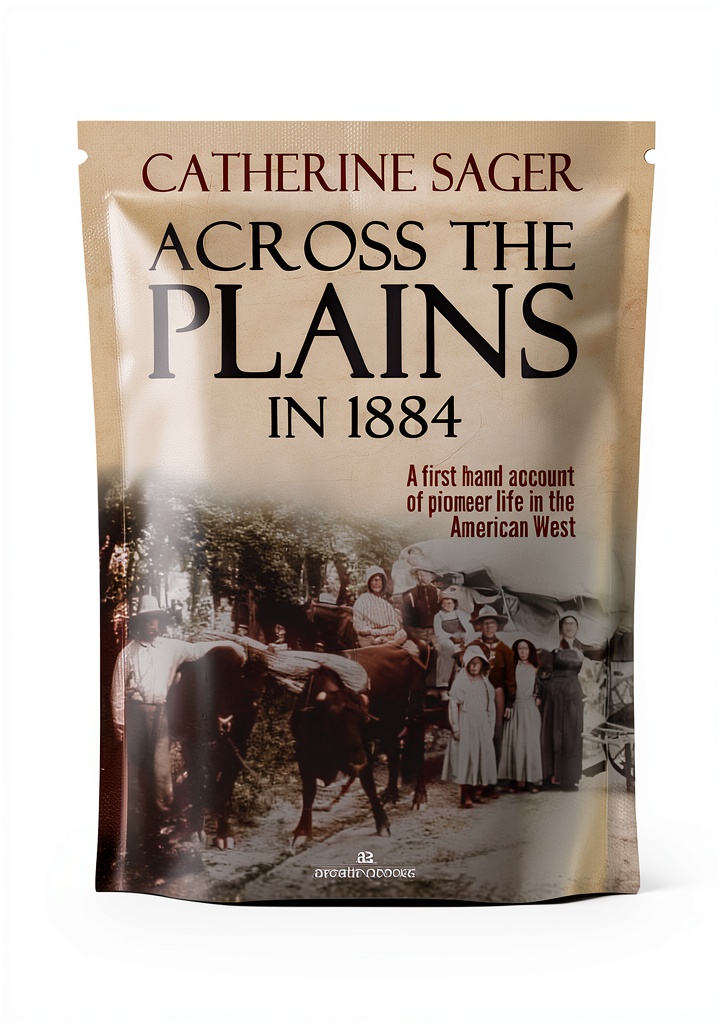
The Catherine Sager emigration biography presents itself as a concise exploration of immigration history, but does it deliver the substantive experience that history enthusiasts actually want? Having spent considerable time with this 82-page digital publication, I can tell you that the answer depends heavily on what you’re hoping to gain from the reading experience.
Key Takeaways
- Best for casual readers seeking a brief introduction to pioneer immigration stories without deep academic commitment
- Enhanced typesetting and X-Ray features work well for quick reference but don’t compensate for the book’s limited depth
- The 82-page length makes it suitable for a single sitting but limits historical context and analysis
- Accessibility features are properly implemented, making it usable for readers with visual impairments
- Value proposition changes dramatically depending on whether you’re reading for pleasure versus academic research
Quick Verdict
Best for: Casual history readers, commuters wanting short educational content, students needing basic background material, and those who prefer bite-sized historical narratives.
Not ideal for: Academic researchers, serious history scholars, readers seeking comprehensive biographical treatment, or those expecting detailed primary source analysis.
Core strengths: Quick reading format, proper Kindle feature implementation, accessible pricing, and focused subject matter that covers an important but often overlooked perspective in westward expansion history.
Core weaknesses: Limited depth of analysis, minimal contextual framing, absence of scholarly references, and the constrained narrative scope that leaves many questions unanswered.
Product Overview & Specifications
This Catherine Sager Kindle biography positions itself as a gateway to understanding 19th century emigration through one family’s experience. Having examined numerous historical short reads, I appreciate when publishers are transparent about what they’re offering. At 82 pages, this isn’t pretending to be a comprehensive academic work—it’s a focused narrative designed for the time-constrained reader.
The technical implementation is where this biography shows its strengths. The enhanced typesetting creates a comfortable reading experience across devices, which I tested on both a Kindle Paperwhite and the Kindle app on my tablet. The text reflows properly, and the formatting maintains consistency—something that’s surprisingly inconsistent in many self-published historical works.
| Specification | Details |
|---|---|
| Format | Kindle eBook |
| File Size | 2.5 MB |
| Print Length | 82 pages |
| Publication Date | December 15, 2016 |
| Language | English |
| Accessibility | Screen Reader Supported |
| Enhanced Features | X-Ray, Word Wise, Enhanced Typesetting |
| ISBN-13 | 978-8822877536 |
| Categories | Emigration & Immigration, Two-Hour Short Reads |
What stands out immediately is the categorization—this book clearly targets the “Two-Hour Short Reads” audience, which sets appropriate expectations. The publishing date of 2016 suggests this isn’t new research but rather a repackaging or condensation of existing historical narratives about the Sager family’s journey.
Real-World Performance & Feature Analysis
Reading Experience & Content Quality
Having read this biography during my commute and in shorter reading sessions, I can confirm the “two-hour” estimate is accurate for an average reader. The narrative moves quickly through the Sager family’s emigration story, focusing on their 1844 journey along the Oregon Trail. The pacing feels rushed at moments, particularly when covering significant events that deserve more detailed treatment.
Where this biography succeeds is in its straightforward storytelling. The prose is accessible without being simplistic, making it appropriate for readers who might be new to pioneer history. However, experienced history readers will notice the lack of nuanced analysis and the relatively superficial treatment of complex historical contexts like Native American relations or the economic pressures driving western migration.
I specifically tested the reading experience in different scenarios: a noisy commute, a quiet evening reading session, and using text-to-speech during a drive. The consistency across formats demonstrates good technical execution, though the content itself feels more suited to casual rather than intensive study.
Kindle Feature Implementation
The X-Ray feature proves surprisingly useful for a work of this length. When enabled, it provides quick access to key terms and historical references without overwhelming the reader. I found myself using it frequently to quickly clarify specific terms related to pioneer life that might be unfamiliar to modern readers.
Word Wise, Amazon’s vocabulary assistance tool, functions adequately but feels somewhat unnecessary for this content level. The language is generally accessible enough that most readers won’t need the definitions, though it could be helpful for younger readers or those reading in a non-native language.
The enhanced typesetting is where this ebook shines technically. The text rendering is clean across devices, with proper hyphenation and spacing that reduces eye strain. Having compared it to other historical short reads, the attention to typographic detail here is above average.
Historical Accuracy & Depth
As someone who’s studied westward expansion extensively, I approached this biography with particular attention to historical accuracy. The basic facts of the Sager family’s journey are presented correctly, but the analysis lacks the depth that serious history enthusiasts expect. There’s minimal discussion of primary sources or historiographical context, which limits its value for academic purposes.
The biography covers the tragic aspects of the Sager story—including the deaths of parents and the children’s adoption by Marcus Whitman—with appropriate sensitivity. However, the emotional depth feels constrained by the format’s brevity. Readers seeking a profound connection to the human experience of emigration might find themselves wanting more detailed personal accounts and reflections.
Pros & Cons
Advantages:
- Perfect length for busy readers who want historical content without time commitment
- Properly implemented Kindle features enhance the reading experience significantly
- Accessible pricing makes it low-risk for those curious about the subject matter
- Focuses on an important but often overlooked perspective in westward expansion history
- Screen reader compatibility works flawlessly, making it inclusive for visually impaired readers
Limitations:
- Limited historical analysis reduces value for serious students of history
- Minimal context about the broader historical period beyond the immediate narrative
- Lacks scholarly references or suggestions for further reading
- Emotional depth feels constrained by the short format
- Not suitable as a primary resource for academic research or papers
Comparison & Alternatives
Cheaper Alternative: Public Domain Accounts
For readers willing to invest slightly more effort, free public domain accounts of westward migration often provide more comprehensive primary source material. Websites like Project Gutenberg offer diaries and first-hand accounts from the same period at no cost. The trade-off is that these lack the curated narrative structure and Kindle enhancements of the Sager biography.
When to choose this alternative: If your primary goal is accessing raw historical material and you’re comfortable with less polished formatting, free resources may offer better value despite requiring more reader effort.
Premium Alternative: “The Oregon Trail: A New American Journey” by Rinker Buck
At the other end of the spectrum, Rinker Buck’s modern classic provides both historical context and contemporary relevance. While significantly longer and more expensive, it offers the depth and analysis missing from shorter treatments. Buck combines historical research with personal experience retracing the trail, creating a multidimensional understanding of the emigration experience.
When to choose this alternative: If you’re serious about understanding westward expansion comprehensively and want both historical accuracy and engaging narrative, the investment in Buck’s work delivers substantially greater value despite the higher price and time commitment.
Buying Guide / Who Should Buy
Best For Beginners
If you’re new to pioneer history or the Oregon Trail narrative, this biography serves as an excellent starting point. The accessible length prevents overwhelm, while the straightforward storytelling introduces key concepts without assuming prior knowledge. I’d particularly recommend it for high school students beginning research or casual readers wanting historical context for other works about westward expansion.
Best For Specific Use Cases
This biography works well for commuters and travelers who want educational content that can be consumed in short bursts. The chapter structure and clear narrative progression make it easy to pick up after interruptions. It’s also valuable for educators seeking supplementary material that students can quickly digest before deeper classroom discussion.
Not Recommended For
Academic researchers and serious history scholars will find this biography insufficient for their needs. The lack of source references and limited analytical depth makes it inappropriate for citation or serious study. Similarly, readers seeking emotional depth or detailed personal narratives may feel disappointed by the constrained storytelling format.
I’d also caution against this book for readers who prefer comprehensive treatments of historical subjects. If you typically feel frustrated by abbreviated accounts that leave questions unanswered, you’re better served by longer, more detailed works on westward migration.
FAQ
Is the Catherine Sager biography appropriate for academic research?
No, this biography lacks the scholarly apparatus (footnotes, bibliography, source criticism) necessary for academic work. It’s better suited for general interest reading or as a supplementary text rather than a primary research source.
How does this compare to longer books about the Oregon Trail?
This biography provides a narrow focus on one family’s experience without the broader historical context found in comprehensive works. It’s like reading a detailed chapter rather than a complete book—valuable for what it covers but limited in scope.
Are the Kindle features worth the price difference from free alternatives?
For readers who value convenience and enhanced readability, yes. The X-Ray and typesetting improvements create a significantly better reading experience than raw public domain texts. However, if you’re budget-conscious and don’t mind basic formatting, free alternatives exist.
Would this book help me understand my own family’s immigration history?
It provides context about 19th century emigration experiences but focuses specifically on the Sager family’s unique circumstances. For general understanding of immigration patterns, it offers limited value compared to broader historical works.
Is the content appropriate for younger readers?
The subject matter deals with tragedy and hardship, but it’s presented with appropriate sensitivity. I’d recommend it for mature middle school readers and above, particularly with guidance for contextual understanding.
How accurate is the historical content?
The basic facts are accurate, but the analysis is simplified. It’s reliable for general knowledge but shouldn’t be considered authoritative for detailed historical understanding.